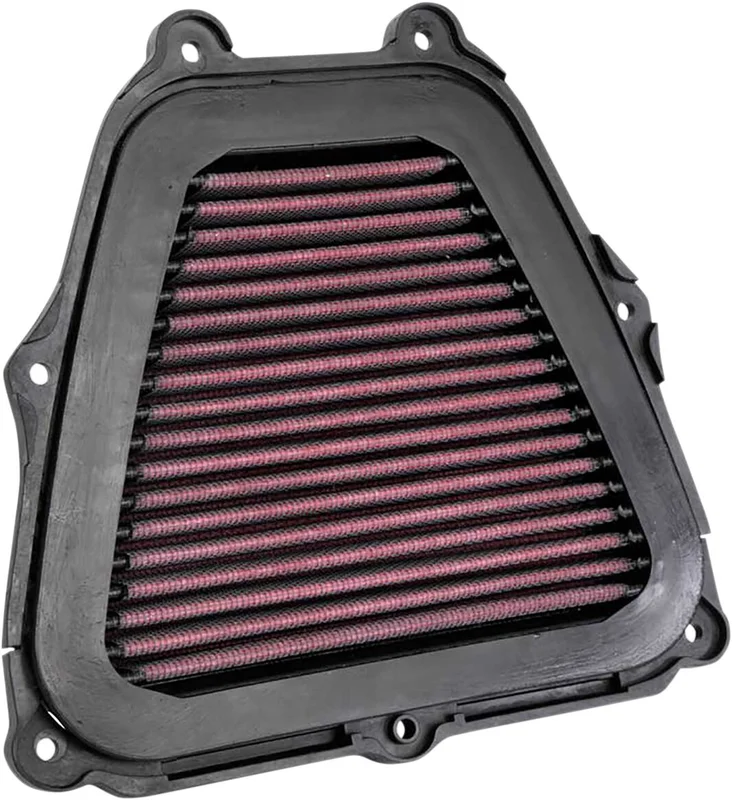
// Guide
Air filter service — the cheap part that saves the dear one
The air filter is the cheapest part on the bike. The engine behind it is the dearest. Here's how to clean, oil and seal one properly — and why a five-minute job saves a top-end.
Updated 15 May 2026
The air filter is the cheapest part on the bike. The engine behind it is the dearest. That one sentence is the whole guide — but riders skip the work anyway, because a neglected filter never lets you down on the trail. It doesn’t strand you. It just quietly costs you a top-end three months early, and sends you no bill until then.
A dirt bike works in the worst air on the planet: roost off the rider in front, dust hanging in the corners, sand, mud, standing water. The filter is the only thing standing between all of that and the inside of your engine. Look after it and it’ll do that job for years. Neglect it for one dusty weekend and the damage is already done before you notice.
This guide covers the lot — when a filter is actually due, how to clean foam without wrecking it, how to oil it so it filters instead of chokes, and the airbox checks that decide whether any of it worked.
How a dirt bike eats air
An engine burns fuel, but fuel is the small half of the mix. For every part of fuel it needs roughly fifteen parts of air, and a hard-revving dirt bike motor pulls an enormous volume of it through the airbox every minute. All of that air has to come through the filter first.
On a car, that filter is dry paper, sat in clean-ish air under a bonnet. A dirt bike can’t use paper. It runs in air thick with dust and grit, so it uses oiled foam — usually two layers of it. Air passes through the open foam easily; dust hits the film of oil on the foam strands and sticks there. The oil is the filter. The foam just holds the oil in the airstream.
That’s the mechanism, and it’s why every step that follows matters. A foam filter only works while it’s oiled, intact, and sealed. Get any one of those wrong and you’ve fitted a filter that isn’t filtering.
The failure that ends engines
Here’s what’s at stake. Dust and sand are abrasive — fine grit is effectively grinding paste. Let it past the filter and it goes straight down the intake into the bore, where it scores the cylinder wall, wears the rings, and grinds the piston and its coating away. Riders call it getting dusted.
A dusted engine loses compression. It burns oil, goes flat on power, and won’t pull like it used to. The fix isn’t a clean and an adjustment — it’s a top-end, sometimes a full rebuild. And the worst part is the silence. A dusted engine doesn’t bang or smoke on the day the grit gets in. It fails slowly, invisibly, and the first real symptom turns up long after the cause is gone.
Understand what doesn’t cause this, too. A filter that’s filthy but intact and properly sealed is still doing its job — a dirty filter restricts air, it doesn’t pass dirt. The engine-killers are the torn filter, the dry or unoiled filter, and the filter that doesn’t seal at the rim. Those are the three faults this guide exists to stop.
When the filter is due
Forget hours and forget mileage. Filter life runs entirely on conditions, and conditions change ride to ride.
A motocross racer cleans the filter after every moto — sometimes between motos at a dusty meeting. An enduro rider through a wet, gritty winter is into it every ride. A trail rider on dry, hard ground with no dust in the air can run several rides on one filter without worry. Sand is the single worst surface for filter load; deep mud and standing water aren’t far behind.
The only reliable check is to look. Pull the seat, pull the filter, and judge it on what you see — matted, grey-brown, gritty to the touch means clean it now. The smart setup is two filters in rotation: one in the bike, one already cleaned, oiled and bagged ready to swap. That turns a filthy-day service into a sixty-second job at the truck, and it means you never ride a marginal filter just because cleaning one is a faff.
Foam, gauze and paper
Three types exist. Only two belong on a dirt bike.
Oiled foam is the off-road standard. Most MX and enduro filters are a two-stage foam — a coarse outer layer and a finer inner one — moulded onto a sealing flange that clamps into the airbox. It carries a heavy dirt load, seals well, and cleans up again and again. This is what the rest of this guide is about.
Pleated cotton gauze — the K&N style — is re-oilable cotton between wire mesh, and it’s fitted from the factory to some bikes. If that’s what your airbox takes, run it; service it on its own maker’s instructions, which differ from foam.
Dry paper is a road-bike part. It can’t carry the dirt load off-road throws at it, it blocks fast, and it can’t be cleaned. Don’t run paper on a dirt bike.
Worth knowing about: a filter skin or pre-filter — a thin sacrificial outer cover that takes the worst of the mud and sand so the main filter lasts longer. Cheap insurance for sand riding and gritty winters.
Cleaning a foam filter
Get the filter out without dropping crumbs of dried mud down the intake — that’s the first rule. Once it’s out:
Work the old oil and dirt out with a proper foam filter cleaner or warm, mildly soapy water. Knead it through gently. Do not wring or twist the foam hard to speed things up — that tears the foam and breaks down the glued seams, and a torn filter is an engine-killer. Squeeze, don’t wring.
Rinse until the water runs clear, then dry it completely. This matters more than it sounds: oil won’t bond to damp foam, so a filter oiled while still wet ends up with dry, unprotected patches. Give it real time to dry, away from direct heat that could perish the foam.
Then inspect it in good light. Stretch it gently and look for tears, thin worn spots, splitting seams, or foam that’s gone hard and crumbly with age. Any of that and the filter is finished — bin it and fit the spare. A filter is a few pounds. The engine it guards is not.
Oiling it right
This is the step that’s botched most often, and it’s botched in both directions.
Too little oil leaves dry patches, and a dry patch is an open hole — dust passes straight through unfiltered foam. Too much oil chokes the airflow, richens the fuelling, makes the bike sluggish, and drools surplus oil down into the airbox. Neither is what you want.
Apply foam-specific filter oil — spray or liquid, your choice — over the whole filter, then work it through with your hands until the colour is completely even. No pale dry areas, no heavy wet pooling, no drips when you hold it up. The target is tacky all over: every foam strand wearing a film of oil, the filter holding its shape rather than sagging with excess.
Let the oil set for a few minutes so it stops migrating before the filter goes anywhere near the bike. And don’t forget the sealing flange — see the next section, because the rim is its own job.
The airbox is half the job
A perfectly cleaned, perfectly oiled filter dropped into a neglected airbox still lets the engine down. The filter is half the service. The airbox is the other half.
Before the clean filter goes in, wipe the airbox out — every crumb of dried mud, every loose grain of grit. Anything left in there is downstream of the filter and headed for the intake. Check the airbox drain hole is clear while you’re in there.
Then the seal. The filter’s sealing flange has to clamp evenly against the airbox cage with no gap anywhere round the rim — and that joint needs filter grease, or a thick band of oil, smeared on the lip. Dust will happily creep around an ungreased rim and skip the filter entirely. Make sure the cage or retaining frame seats the flange flat all the way round and the fastener pulls it up evenly.
Last, check the intake boot — the rubber sleeve between the airbox and the carburettor or throttle body. A split or perished boot is an unfiltered hole downstream of everything you just did. And never pressure-wash straight into the airbox; you’ll force water and grit past the filter and into the intake.
Choosing filters and oil
A handful of things keep the job easy.
The filter. Foam filters are shaped to a specific airbox cage — fitment matters, a near-enough filter won’t seal. Buy an OE-quality foam element for your exact bike, and buy two, so a serviced spare is always ready to swap.
Filter oil. Use oil made for foam filters — it’s formulated to stay tacky and trap dust without washing off or migrating. General-purpose oil isn’t the same thing. Spray tins are quick; liquid bottles coat more thoroughly. Either works.
Filter cleaner. A dedicated foam cleaner lifts old oil far better than washing-up liquid and won’t attack the foam the way petrol does. Worth having.
Filter grease. A small tub lasts ages and seals every flange you ever fit. The cheapest insurance on this list.
A filter skin. If you ride sand or gritty winter ground, a sacrificial pre-filter buys your main filter a much longer life.
All of it is fitment-led — the filter shape especially. Tell us the bike and you’ll see the filter that fits its airbox, plus the oil and cleaner to keep it in service, instead of cross-referencing part numbers at the bench.
// In stock now
Air filters in stock
Filters, filter oil, cleaner and skins. All fitment-specific — filter by your bike to see what fits its airbox.
101 OCTANE
101 OCTANE AIR FILTER BOX MINARELLI
£7.51
EMGO
EMGO AIR FILTER CLAMP ON
£6.86
EMGO
EMGO AIR FILTER CLAMP ON
£6.63
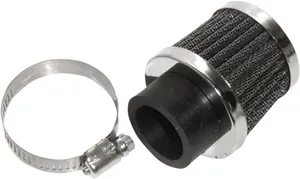
EMGO
EMGO AIR FILTER CLAMP ON
£6.63
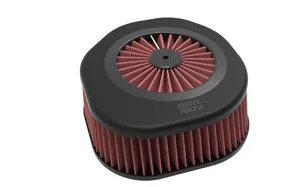
K & N
K & N AIR FLTR SU RMZ450
£144.70
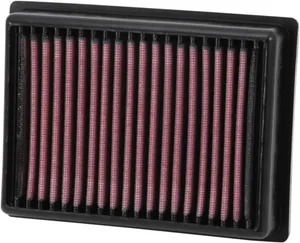
K & N
K & N AIR FILTER REPLACEMENT
£66.34
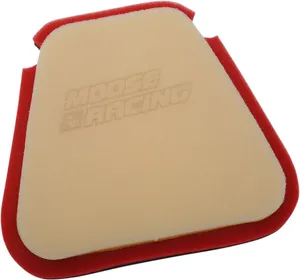
MOOSE OFFROAD HARD-PARTS
MOOSE OFFROAD HARD-PARTS FILTER AIR YZ450F
£22.32
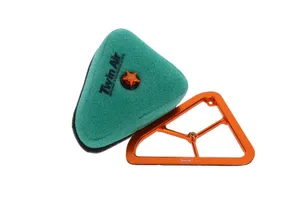
TWIN AIR
TWIN AIR POWER FLOW KIT CRF250-450 '25
£199.02
// Find what fits your bike
The right filter for your airbox.
Filter shape is keyed to the airbox cage — get it wrong and it won't seal. Tell us the bike and we'll show you the filter that fits, plus the oil and cleaner to keep it serviced.
24,868 parts · 55 brands
// FAQ
Frequently asked questions
How often should I clean my dirt bike's air filter?
There's no hour figure — it runs on conditions. A racer cleans the filter after every moto; a trail rider on dry, dust-free ground can get several rides out of one. Sand is the worst going there is, mud not far behind. The honest answer is to look: pull the seat and check the filter before every ride. If it's matted, grey, or carrying visible grit, clean it. When in doubt, clean it — the job costs five minutes and the filter doesn't mind.
Can I clean a foam air filter with petrol?
No. Petrol breaks down the foam and the glue holding the filter together, so a filter washed in fuel a few times starts to perish and tear — and a torn filter is worse than a dirty one. There's also the obvious fire risk. Use a proper foam filter cleaner, or warm water with a little washing-up liquid. Both lift the old oil and grit without attacking the foam.
What happens if I ride with a torn or badly fitted filter?
The engine gets 'dusted' — abrasive grit goes straight down the intake and into the bore. It acts like grinding paste, scoring the cylinder, the rings and the piston. You lose compression, the bike burns oil and goes flat, and the only fix is a top-end. The cruel part is there's no warning: a dusted engine doesn't rattle or smoke on the day it happens. It just quietly wears out months early.
How much oil should I put on a foam filter?
Enough to coat every part of the foam evenly, with no dry patches and no drips. The oil is the actual filter — dust sticks to the oil, not the foam — so a dry spot is an open hole. Too much is also wrong: a soaked filter chokes airflow, richens the mixture, and drools oil into the airbox. You want it tacky all over, not wet. Work the oil through with your hands until the colour is even, then let it set before fitting.
Foam or K&N-style gauze for off-road?
Oiled foam is the standard for MX and enduro because it holds a heavy dirt load and seals well against a typical dirt bike airbox cage. Pleated cotton gauze is re-oilable and fitted to some machines from the factory — fine if that's what your bike takes. The one to avoid off-road is a dry paper element: paper can't carry the dirt load a dirt bike throws at it and it can't be cleaned. Run whatever sits correctly in your airbox, and keep it serviced.
Do I need to grease the filter flange?
Yes — and it's the step most people skip. A smear of filter grease (or a thick band of filter oil) around the sealing lip of the filter is what actually seals it against the airbox cage. Skip it and dust creeps around the edge of the filter without ever passing through it. The cleanest, best-oiled filter in the world does nothing if its rim isn't sealed.