// Guide
Brake pad and disc wear — when 'worn out' isn't worn at all
Most brakes that feel finished aren't worn out — they're glazed, contaminated, or full of air. Here's how pads and discs really wear, and how to tell the difference.
Updated 15 May 2026
Brakes are the one system on the bike you only notice when they stop working. Suspension you can feel fading. A chain you can hear. Brakes just quietly do their job — right up until the lever comes back to the bar on the approach to a corner you’ve already committed to.
Here’s what most riders get wrong: a brake that feels finished usually isn’t worn out. It’s glazed, it’s contaminated, or there’s air in the line. Genuine pad-and-disc wear is easy to measure and easy to plan for. The trouble is the faults that mimic wear — and they’re the ones that catch people out.
This guide covers both. How pads and discs really wear, when each is genuinely done, and how to tell a worn brake from one that’s just been maintained wrong.
How a brake actually wears
A disc brake is a friction pair. The pad clamps the disc, both surfaces wear, and both are consumable. The pad is the sacrificial half — softer, made to wear so the disc doesn’t. It goes first and goes faster. But the disc wears too. Slowly, quietly, and not forever.
Front and rear wear differently. The front does most of the stopping, so front pads wear faster in normal riding. The rear gets a different kind of abuse: riders drag it, it runs hot, and it sits low and exposed where rocks and roost bend the disc. Check both — the front for honest wear, the rear for wear and damage.
The multiplier on all of it is grit. Sand and mud work like grinding paste between pad and disc, so a wet, gritty winter can halve pad life against a dry summer on the same bike. Conditions drive the service clock here far more than hours do.
When the pads are done
Pads wear from the friction face down towards the steel backing plate. Replace them when the friction material is down to roughly a millimetre. Most off-road pads carry a moulded wear groove or step — when that indicator has worn away, so have the pads.
The line you must not cross is metal-on-metal. Let the friction material wear away completely and the steel backing plate runs straight on the disc. It wrecks the disc in a single ride, and gives you almost no braking while it does it. A set of pads is cheap. A disc is not. Catch the pads long before the backing plate gets close.
Don’t run pads to a guessed interval. Pull a wheel, look at the pad edge, and you know in two minutes. Do it more often than feels necessary through wet, gritty months — that’s when a set can vanish fast.
When the disc is done
Discs wear slowly, but they do wear, and they fail in three ways.
Thin. Every disc has a minimum thickness, usually stamped on the disc itself. Measure across the braking surface with a caliper or micrometer. Under the minimum, replace it — a thin disc sheds heat poorly and has less metal to stay flat. Worn discs often wear unevenly too, leaving a raised lip at the edge of the braking band.
Warped or bent. A lever or pedal that pulses once per wheel revolution is runout — the disc isn’t flat. A mild warp you can ride; a genuine bend, common on rear discs that have met a rock, needs replacing.
Scored. Deep grooving, from running pads to the backing plate or from grit cutting in. A scored disc shreds new pads and won’t let them seat. Fresh pads need a disc that’s within thickness and reasonably smooth — fit them to a wrecked disc and you’ve thrown the pads away.
Glazed, not worn
This is the most common misdiagnosis on the bike. The brake feels dead — you pull the lever, the bike barely slows, the lever itself is firm but there’s no bite. You pull the wheel expecting the pads gone, and they’ve got plenty of meat left.
That’s glazing. The pad and disc surfaces have overheated and gone hard and glassy instead of lightly textured. It comes from dragging the brake — the rear especially — from a long descent, or from pads that were never bedded in properly. A glazed brake has all the material it needs. It just won’t grip.
The fix is to deglaze. Scuff the pad faces on emery cloth laid flat, scuff the disc with a green abrasive pad or emery, clean both surfaces, and re-bed them properly. Badly cooked pads won’t come back and should be replaced — but always check for glazing before you assume the pads are worn. You may not need new pads at all.
Contamination kills pads
The other fault that masquerades as a worn-out brake is contamination. Any oil on the friction surface ruins it — chain lube flung off the chain onto the rear disc, fork oil from a blown seal creeping onto the front, an over-enthusiastic spray of the wrong cleaner, even sustained mud and standing water.
A contaminated pad feels much like a glazed one: no bite, sometimes grabby then nothing, sometimes a faint burnt-oil smell. The hard truth is that once oil is into an organic pad, the pad is finished. Scuff and clean the surface and you might claw back a few stops, but it will never be right. Replace it.
The disc you can save. A proper wipe-down with brake-specific cleaner — not a general degreaser that leaves a residue — brings it back. Then prevention: keep chain lube off the rear disc, because overspray is the number-one rear-brake killer, and fix weeping fork seals before the oil ever reaches the front pads.
Soft lever, fading brakes
Here’s the one that isn’t a wear problem at all. If the lever feels spongy, travels a long way before anything happens, or fades on a long descent while the pads and disc are both fine — the fault is in the hydraulics, not the friction parts.
Two causes. Air in the system: air compresses, fluid doesn’t, so any air in the line gives a soft, vague lever. It gets in through a reservoir that ran low, a tired seal, or a sloppy bleed. Old fluid: brake fluid is hygroscopic — it pulls moisture out of the air over months. Water in the fluid drops its boiling point, so on a long, hot drag the fluid boils, vapour forms in the line, and the brake fades exactly when you’re leaning on it. Fluid gone dark and murky in the reservoir is overdue.
The fix for both is a fluid change and a proper bleed. Do it yourself with a length of clear hose and a spanner, or hand it to a shop. Either way, fresh fluid once a year is one of the cheapest, highest-value jobs on the bike. Match the DOT spec, and don’t let the reservoir run dry mid-bleed or you’ll pull air straight back in.
Bedding in new parts
New pads, a new disc, or both — none of them work properly straight out of the box. They need bedding in, and skipping that step is why a fresh brake can feel worse than the old one.
Bedding does two things. It transfers a thin, even layer of pad material onto the disc, and it brings both up to temperature gradually so the pad cures instead of getting heat-shocked. You do it with a run of progressively harder stops from speed — firm and controlled, slowing right down, but not stamping to a dead stop and parking with the brake held. Holding a hot brake stationary prints an uneven slug of material onto the disc, and that gives you judder. Half a dozen controlled stops and the brake comes alive.
Skip the process and you get patchy deposits, judder, early glazing, and a brake that never finds the bite it should have. New pads on an old disc still need it. New pads on a new disc need it most. Five minutes at the start of the session — do it.
Choosing pads, discs and fluid
What you’re actually buying.
Pads. Sintered (metallic) pads handle heat, mud and water far better, bite harder, and last longer — which is why most MX and enduro riders run them. The trade-offs are faster disc wear and a sharper, sometimes grabby feel. Organic pads are gentler on the disc and smoother, but fade sooner and don’t love the wet. For genuine off-road, sintered is usually the answer; organic earns its place on a trail bike that mostly sees dry going. Either way the pad shape is keyed to the caliper, so it’s fitment-specific.
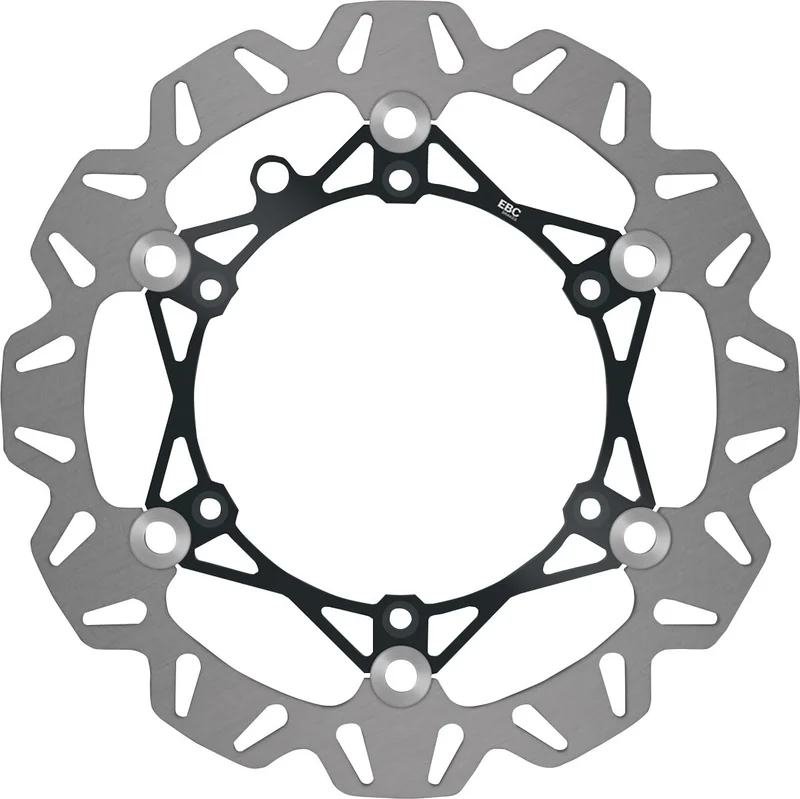
Discs. Replace like-for-like on diameter and mounting, or step up to a contour or wave-style off-road disc that sheds mud and runs cooler. A floating disc — a separate carrier and braking ring — copes with heat distortion better than a one-piece solid disc. Whatever you fit, mind the pairing: aggressive sintered pads against a soft disc wear that disc quickly.
Fluid. Most dirt bikes run DOT 4. DOT 5.1 is also a glycol fluid, cross-compatible, and has a higher boiling point — worth it if you cook brakes on long descents. DOT 5 is silicone-based and is not compatible — never mix it in. Check what’s printed on the reservoir cap and stick to it.
Everything here is fitment-specific — pad shape, disc diameter and mount, even the fluid spec. Filter by your bike and you’ll see only what fits, instead of cross-referencing part numbers at the bench.
// In stock now
Brake parts in stock
Pads, discs, lines, fluid, caliper parts. All fitment-specific — filter by your bike to see what fits.
BREMBO
BREMBO BRAKE PAD SINTER SX OFFROAD
£38.52
BREMBO
BREMBO BRAKE PAD SINTER SX OFFROAD
£38.48
BREMBO
BREMBO BRAKE PAD SINTER SX OFFROAD
£38.43
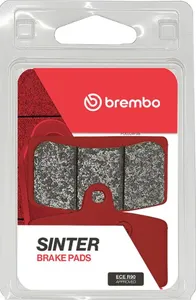
BREMBO
BREMBO BRAKE PAD SINTER SA
£37.17
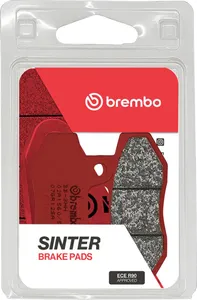
BREMBO
BREMBO BRAKE PAD SINTER SA
£31.25
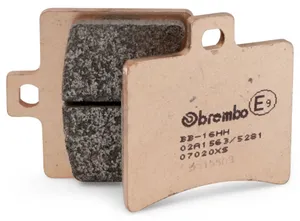
BREMBO
BREMBO BRAKE PAD SINTER XS SCOOTER
£26.53
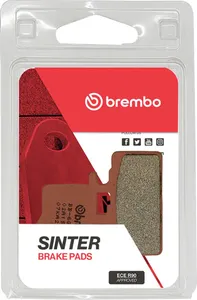
BREMBO
BREMBO BRAKE PAD SINTER SD OFFROAD
£26.48
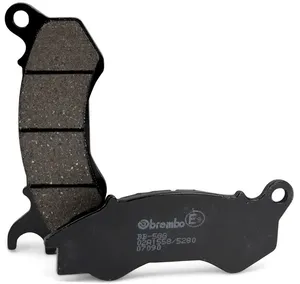
BREMBO
BREMBO BRAKE PAD GENUINE CARBON CERAMIC
£23.01
// Find what fits your bike
Brake parts, sized to your bike.
Pad shape, disc diameter and mount, even the fluid spec — they all change between models. Tell us the bike and we'll show you what fits, no cross-referencing part numbers.
24,868 parts · 55 brands
// FAQ
Frequently asked questions
How long should a set of brake pads last?
There's no mileage figure — pad life runs on conditions, not hours. A wet, gritty winter of MX can finish a set of front pads in a couple of months; the same set on a dry-weather trail bike lasts a year. Grit between the pad and disc is the multiplier, and the front always goes before the rear because it does most of the stopping. Don't run to a number. Pull the wheel, look at the friction material, and if it's near the wear groove, order pads before your next ride.
Can I just change the pads and leave the disc?
Yes, if the disc passes its checks: above the minimum thickness stamped on it, no deep scoring, no real warp. New pads bed onto whatever disc they run against, so a worn or grooved disc gives patchy contact and chews fresh pads early. If the disc is marginal, do both — pads alone on a bad disc is money wasted.
My brakes have no bite but the pads look fine — what's wrong?
Almost always glazing or contamination, not wear. Glazing is an overheated, glassy surface; contamination is oil soaked into the pad. Check for a shiny sheen and a smell of oil. Deglazing saves a mild case — an oil-soaked pad needs replacing.
Can a contaminated brake pad be cleaned and reused?
The disc, yes — brake cleaner brings it back. The pad, no. Once oil is into the friction material, scuffing the surface buys you a few stops and no more. A pad soaked in chain lube or fork oil gets replaced.
Sintered or organic pads for off-road?
Sintered for most riders. They cope with the mud, water and heat that off-road throws at a brake, bite harder, and outlast organic pads by a clear margin. The cost is faster disc wear and a sharper initial feel. Organic pads are kinder to the disc and smoother at the lever, but they fade sooner and don't like the wet — fine on a trail bike that mostly rides dry, a poor choice for racing or winter enduro. Unsure? Fit sintered, and match a disc rated to run with them.
Do I need to bleed my brakes, and can I do it at home?
If the lever feels spongy or travels a long way before it bites, yes — that's air or tired fluid, and no amount of new pads will fix it. It's a home job: clear hose, a spanner, fresh fluid of the correct DOT spec, and the patience not to let the reservoir run dry. Change the fluid once a year either way — it absorbs water and fades under heat.